
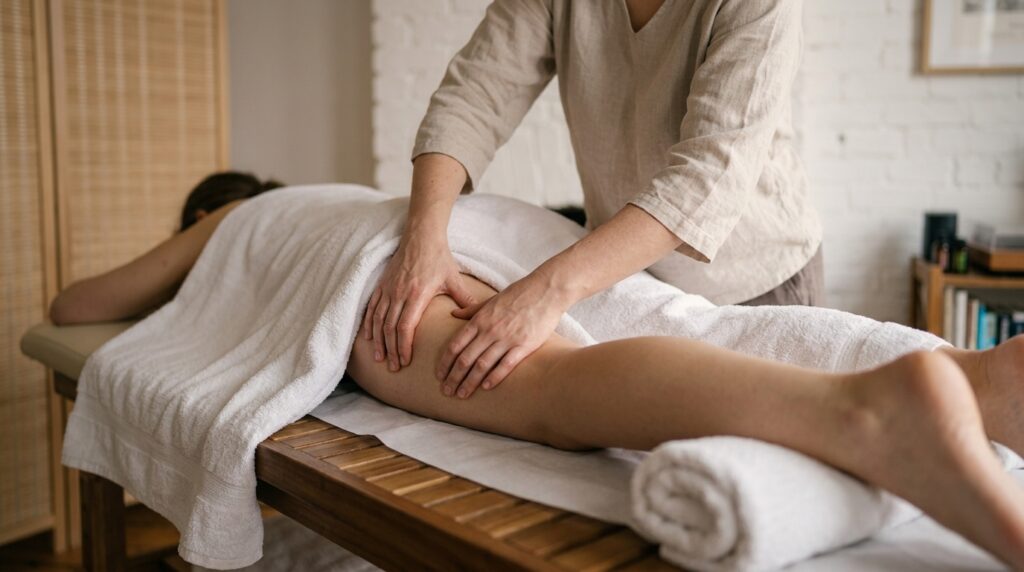
If you have been searching for massage for sciatica near me, you probably want to know two things: whether massage will actually help, and what happens once you are on the treatment couch. The honest answer is that massage can ease the muscle tension and guarding that build up around an irritated sciatic nerve, and it works best as part of a plan that keeps you moving. At BackSpace, Clapham’s multi-award-winning chiropractic and sports massage clinic founded in 2016, we treat sciatica with massage, chiropractic care and rehab exercise under one roof, and many patients first find us through a search for a back pain chiropractor near me. This guide explains what massage can and cannot do for sciatica, which techniques are used and how to tell when you need more than massage.
What Is Sciatica?
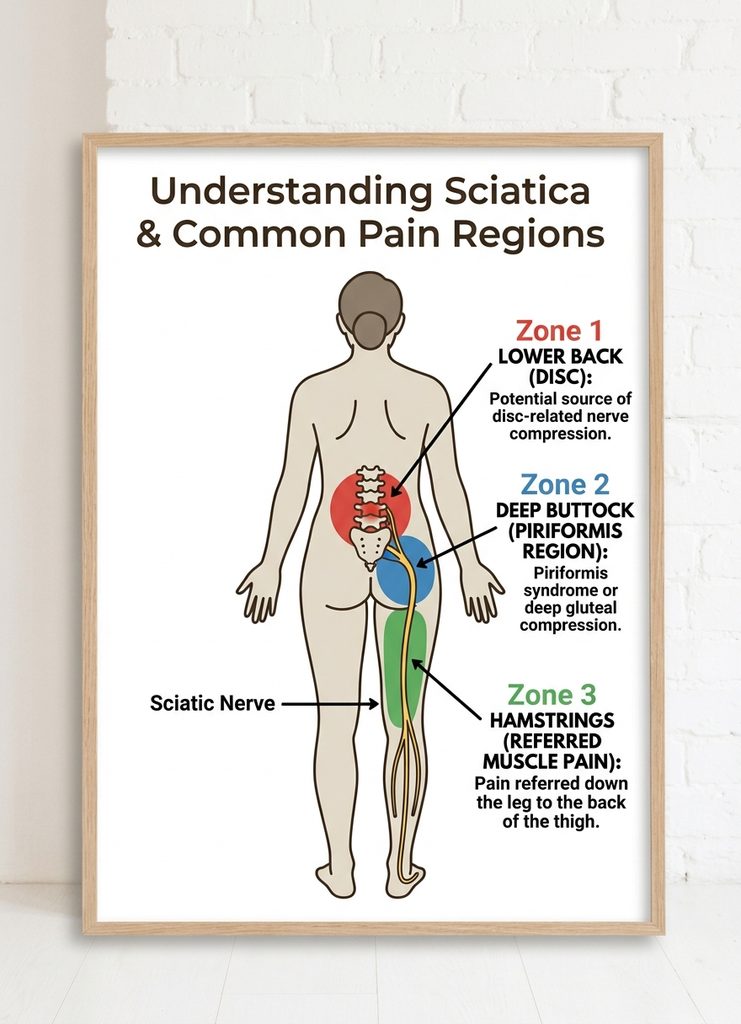
Sciatica describes pain that travels along the path of the sciatic nerve, from the lower back through the buttock and down the back of the leg, sometimes as far as the foot. The NHS describes sciatica as pain caused by something pressing on or irritating the nerve, often with tingling, numbness or weakness, and leg pain that is usually worse than any back pain.
Not every pain down the leg is true sciatica, and the difference matters when deciding whether massage is likely to help. If you want a broader overview of what else causes symptoms below the knee, our guide to leg pain covers the main patterns.
Disc-Related Sciatica
The most common cause is a bulging or herniated disc in the lower back irritating a nerve root. The nerve becomes sensitive, and the muscles around it tighten to protect the area.
Buttock-Driven Sciatic Pain
Sometimes the nerve is sensitised as it passes through the deep muscles of the buttock, including the piriformis. This often follows long periods of sitting, running or a change in training load.
Referred Muscle Pain That Mimics Sciatica
Trigger points in the gluteal muscles and hamstrings can send aching pain into the thigh that feels similar to sciatica, without any nerve involvement. This type often responds particularly well to soft tissue work.
| Feature | Nerve-Related Sciatica | Muscle-Referred Pain |
|---|---|---|
| Type of pain | Sharp, burning or electric | Deep, dull ache |
| How far it travels | Often below the knee, into the calf or foot | Usually stops above the knee |
| Tingling or numbness | Common | Uncommon |
| Coughing or sneezing | Can make it worse | Usually no effect |
| Response to massage | Eases surrounding muscle tension; nerve still needs time and movement | Often eases noticeably after treatment |
Does Massage Help Sciatica?
What the Evidence Says
The research on massage for sciatica specifically is limited. The broader evidence is clearer. NICE guidance on low back pain and sciatica, updated in July 2026, recommends considering manual therapy, including soft tissue techniques such as massage, but only as part of a treatment package that includes exercise. A Cochrane review of massage for low back pain found that massage improved pain in the short term, although the quality of the evidence was low and longer-term benefits were less certain.
In plain terms, massage is a reasonable part of sciatica care, but it should not be the whole plan.
What Massage Can Do
- Reduce protective muscle guarding: when a nerve is irritated, nearby muscles tighten to splint the area. Easing that tension often makes movement more comfortable.
- Release tight gluteal and hamstring muscles: these can add pressure around the nerve and contribute to pain into the thigh.
- Improve comfort and sleep: many patients find the days after a session easier, which helps them stay active.
- Make exercise more achievable: reduced tension often means rehab exercises can be done with less discomfort.
What Massage Cannot Do
Massage cannot repair a disc or physically move it away from a nerve. Nerve irritation settles with time, movement and gradually restoring load to the area. That is why we combine soft tissue treatment with exercise and advice, rather than relying on massage alone.
Which Muscles Are Treated in a Sciatica Massage?
A good sciatica massage is focused, not a general back rub. The areas usually involved are:
- Lower back muscles: the muscles either side of the spine and the deeper muscle running between the ribs and pelvis
- Gluteal muscles: the large and middle buttock muscles, which often hold significant tension
- Piriformis and deep hip rotators: small muscles deep in the buttock, close to where the sciatic nerve passes
- Hamstrings: frequently tight and protective when the nerve is sensitive
- Calf muscles: often tense when symptoms reach the lower leg
- Hip flexors: tight hip flexors from desk work can change how the lower back is loaded
Pressure is never applied directly onto the nerve path in a way that increases tingling or shooting pain.
Sports Massage vs Deep Tissue Massage for Sciatica
At BackSpace, we offer both sports massage and deep tissue massage. For sciatica massage near me searches, patients often ask which they should book.
| Feature | Sports Massage | Deep Tissue Massage |
|---|---|---|
| Focus | Movement, recovery and specific muscle groups | Deeper layers of muscle and connective tissue |
| Pressure | Moderate to firm, varied | Firm and sustained |
| Best suited to | Active people, runners, gym-goers, sitting-related tightness | Long-standing tension and chronic tightness |
| Common techniques | Stretching, trigger point work, muscle energy technique | Myofascial release, slow deep strokes, instrument-assisted release |
| Sciatica tip | Good starting point when the nerve is still sensitive | Better once acute symptoms have calmed |
Techniques We Commonly Use
Depending on your symptoms, your therapist may use myofascial release, neuromuscular technique for trigger points, instrument-assisted fascial release, muscle energy technique and assisted stretching. Dry needling may also be used for stubborn trigger points in the buttock and hamstring muscles, if appropriate for you.
What to Expect at a Sciatica Massage Appointment
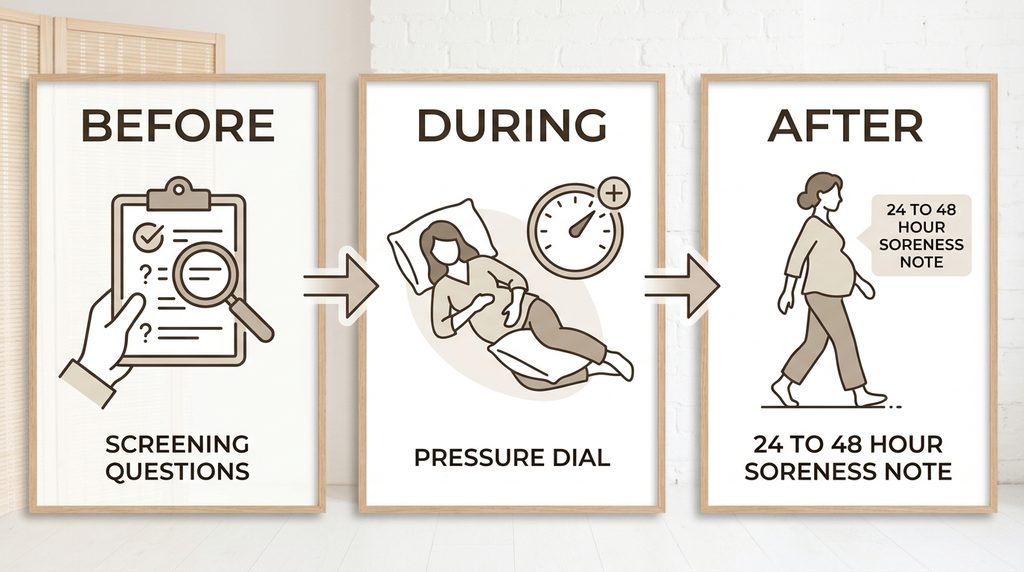
Before Your Treatment
Your therapist will ask where the pain travels, what makes it better or worse and whether you have numbness, weakness or any changes in bladder or bowel control. This screening matters. If anything suggests nerve compression needing medical review, you will be advised to see a GP or urgent care first.
During the Session
Treatment sessions run for 60 minutes. You may lie face down, on your side with pillows between your knees, or a mix of both, depending on what is comfortable. Pressure is adjusted to your feedback throughout. Firm work on tight muscles can feel intense, but it should never cause sharp pain shooting down your leg or increased tingling. If it does, tell your therapist straight away.
After the Session
Mild soreness for 24 to 48 hours is normal, similar to how you might feel after a workout. Light walking and gentle movement help. Our post on how to get the most out of your massage covers aftercare, hydration and simple movements to keep mobile between sessions.
When Massage Is Not Enough: Chiropractic for Sciatica
If your pain is mainly nerve-related, involves the lower back joints or has lasted more than a few weeks without improving, massage alone is unlikely to be enough. This is where seeing a chiropractor for sciatica near me can make a difference.
Chiropractic at BackSpace combines a full assessment with gentle joint adjusting, soft tissue work, the McKenzie method for directional exercises and a tailored rehab programme. Where back pain is a big part of the picture, it often overlaps with our lower back pain treatment in Clapham.
| Approach | What It Targets | Best Suited To |
|---|---|---|
| Massage alone | Muscle tension, guarding and trigger points | Muscle-referred pain, mild symptoms, recovery support |
| Chiropractic alone | Joint movement, nerve sensitivity, movement patterns | Disc-related or persistent nerve symptoms |
| Combined care | Muscles, joints and movement together | Most people with sciatica lasting more than a few weeks |
Many of our patients use both: chiropractic to address the source and guide rehab, and massage to manage muscle tension along the way.
When to Avoid Massage and Get Urgent Help
Massage is not appropriate if you have signs of a serious nerve problem. Go to A&E or call 999 if you have:
- Sciatica in both legs at the same time
- Numbness around the genitals or back passage
- New difficulty passing urine or controlling your bladder or bowels
- Severe or worsening weakness in both legs
Speak to your GP before massage if you have calf pain with swelling or redness (which can signal a blood clot), you take blood-thinning medication, or you have had recent spinal surgery.
Self-Help Between Sessions
- Keep moving little and often. Bed rest tends to slow recovery.
- Break up long periods of sitting, especially at a desk or while driving.
- Use a heat pack on the lower back or buttock for 15 to 20 minutes to ease muscle tension.
- Sleep on your side with a pillow between your knees.
- Do the exercises your clinician gives you consistently, even on better days.
Sciatica Massage in London at BackSpace
Our massage team includes Cecile Charrier, who holds an LSSM Level 5 Sports Massage qualification, and Pete Mavromatis. You can read more about them and our chiropractors on our team page. For practical details on what to wear, insurance and booking, see our clinic FAQs.
BackSpace is at 15 Clapham Park Road, London SW4 7EE, a one-minute walk from Clapham Common Underground station (use the Clapham Common South Side and Clapham Park Road exit). Call 020 7498 7998, email info@thebackspace.co.uk, or book an appointment online.
Frequently Asked Questions
-
Can Massage Make Sciatica Worse?
It can if pressure is applied too aggressively over an irritated nerve, or if massage is used during a severe flare-up. A skilled therapist screens your symptoms first, avoids direct pressure on the nerve path and adjusts pressure to your feedback. Mild muscle soreness for a day or two afterwards is normal. Increased shooting pain, tingling or numbness is not, and should be reported to your therapist so the approach can be changed.
-
How Many Massage Sessions Will I Need for Sciatica?
It depends on the cause and how long you have had symptoms. Muscle-referred pain often eases within two to four sessions, while nerve-related sciatica usually needs a broader plan that combines massage with exercise and, where appropriate, chiropractic care. Many people notice easing after the first session or two. We review your progress regularly, and if massage is not helping, we will recommend a different approach rather than continue booking sessions.
-
Is Deep Tissue Massage Good for Sciatica?
Deep tissue massage can be helpful once the most acute symptoms have settled, particularly for long-standing tension in the buttock, hamstrings and lower back. During a fresh flare-up, when the nerve is very sensitive, a lighter sports massage approach is usually more comfortable and better tolerated. Your therapist will choose the pressure and techniques based on how irritable your symptoms are on the day, and will adjust as you improve.
-
Should I See a Chiropractor or a Massage Therapist for Sciatica?
If you are searching for a chiropractor sciatica near me or a massage therapist, the right choice depends on your symptoms. A chiropractor assesses the spine, joints and nerve involvement and builds a rehab plan, which suits disc-related or persistent sciatica. Massage targets muscle tension and is ideal for muscle-referred pain or as support alongside chiropractic care. If you are unsure, start with a chiropractic assessment, and we will recommend massage if it suits you.
-
Can I Massage My Own Sciatica at Home?
Gentle self-massage can help between sessions. Sitting or lying on a tennis ball or massage ball to work into tight buttock muscles, or using a foam roller on the hamstrings and calves, can ease tension. Keep pressure moderate and stop if it triggers tingling, numbness or pain shooting down the leg. Self-massage works best as a top-up alongside your exercises, not as a replacement for a proper assessment if symptoms persist.
-
Where Can I Find Sciatica Massage in London?
BackSpace offers sciatica massage in London from our clinic on Clapham Park Road, a one-minute walk from Clapham Common Underground station on the Northern line. Our massage therapists work alongside our GCC-registered chiropractors, so if your symptoms need more than soft tissue work, you can be assessed and treated in the same clinic. Every appointment starts with screening questions to make sure massage is the right choice for your symptoms.
Massage will not fix sciatica on its own, but in the right hands and alongside the right exercises, it can make recovery noticeably easier.