
Lower back pain when pregnant is one of the most common reasons women across London contact us, and in most cases it can be eased with the right mix of movement, practical changes and hands-on care. Whether you found us by searching for a back pain chiropractor near me or your midwife suggested you get your back checked, this guide covers why pregnancy affects the lower back, how to tell it apart from pelvic pain and sciatica, what you can safely do at home, and when treatment is worth considering. It is based on what our GCC-registered chiropractors see every week at BackSpace, Clapham’s multi-award-winning chiropractic clinic, founded in 2016.
How Common Is Lower Back Pain in Pregnancy?
Very. A Cochrane review of treatments for back and pelvic pain in pregnancy reports that more than two thirds of pregnant women experience low back pain, and almost one in five experience pelvic pain. The two often overlap, and both tend to build as pregnancy progresses, affecting work, sleep and everyday tasks.
Common does not mean you have to put up with it. Pain that stops you sleeping, walking comfortably or getting through a working day deserves attention.
What Causes Lower Back Pain When Pregnant?
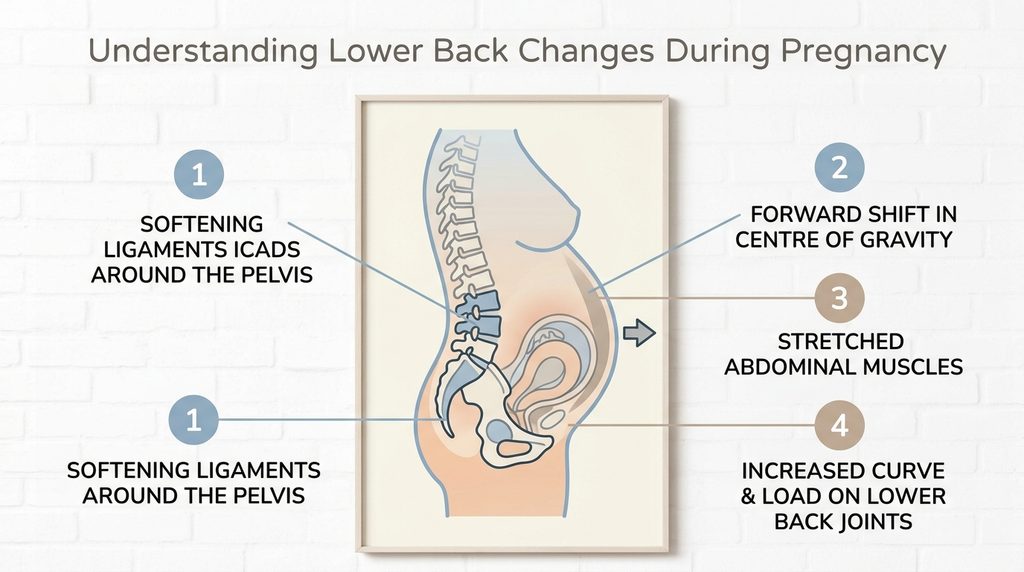
There is rarely one single cause. In clinic, we usually find two or three of the following working together.
Softening Ligaments
Pregnancy hormones, including relaxin, soften and stretch the ligaments that support the pelvis and lower spine. This prepares the body for birth, but it shifts more of the work of holding you stable onto the surrounding muscles, which can tire and tighten.
A Changing Centre of Gravity
As your bump grows, your weight moves forward. Most women lean back to compensate, which deepens the curve in the lower back and compresses the small facet joints there. By the third trimester, this posture can feel like a constant ache by the end of the day.
Stretched Abdominal Muscles
Your abdominal muscles lengthen and separate to make room for the baby. They usually share the job of supporting your spine, so as they stretch, your back muscles take on more load.
Previous Back Problems and Daily Load
A history of back pain is one of the strongest predictors of back pain in pregnancy. If you have had lumbago or a disc problem before, you are more likely to notice symptoms early. Desk work, long commutes, lifting an older child and poor sleep all add to the load.
Is It Lower Back Pain, Pelvic Pain or Sciatica?
Pregnancy back pain is not one condition. Where the pain sits and what sets it off tells us a lot, and it changes which self-help strategies work best.
| Type | Where You Feel It | What Usually Aggravates It | What It Often Feels Like |
|---|---|---|---|
| Lower back pain | Above the waistband, either side of the spine | Standing for long periods, bending, end of the day | Dull ache, stiffness, muscle tightness |
| Pelvic girdle pain | Back of the pelvis, buttocks, pubic bone, groin | Walking, stairs, standing on one leg, turning in bed | Sharp or catching pain, sometimes clicking |
| Sciatica-type pain | Buttock and down the back of the thigh or leg | Sitting, certain sleeping positions | Burning, shooting or tingling pain |
If your pain is mainly around the pelvis or pubic bone, tell your midwife, as the NHS can arrange specialist support and equipment. Pain spreading down the leg needs a slightly different approach, and our sciatica treatment is adapted for pregnancy. Pain that sits more in the outer hip or groin is often managed alongside our hip pain treatment, using the same gentle techniques.
Lower Back Pain Relief You Can Try at Home
These are the strategies we give patients most often. None replaces an assessment if your pain is severe or getting worse, but most women find at least two or three of them make a noticeable difference.
Keep Moving, Little and Often
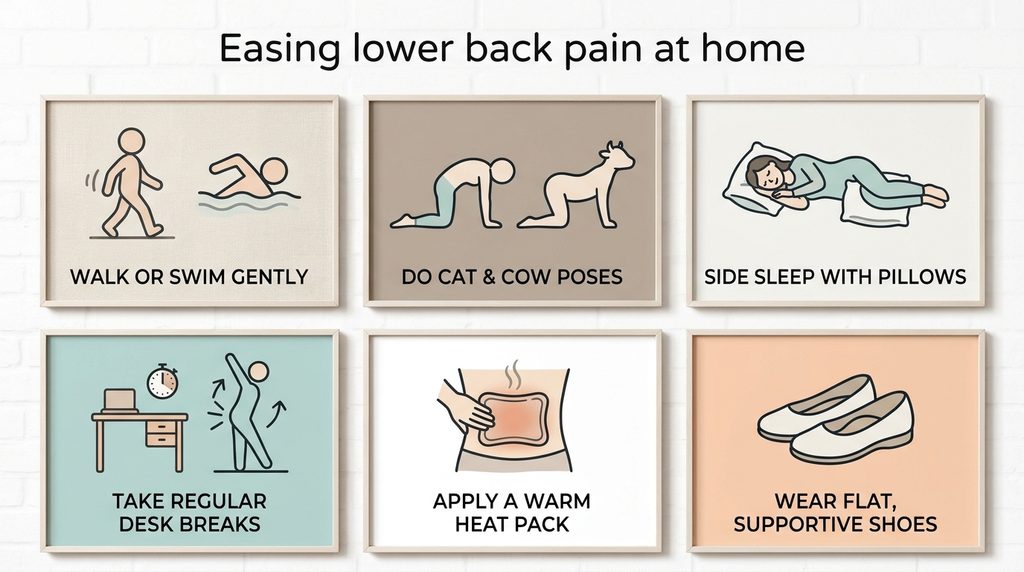
Rest helps in the short term, but long periods of sitting or lying still usually make lower back pain stiffer. Short walks, swimming and aquanatal classes keep the joints moving without heavy load. The Cochrane review found that exercise, on land or in water, may reduce pregnancy-related low back pain and improve day-to-day function.
Gentle Exercises
Try these once or twice a day, staying within a comfortable range:
- Cat and cow on all fours: knees under hips, hands under shoulders, slowly round your back up then return to neutral. Repeat 10 times.
- Standing pelvic tilts: stand with your back against a wall and gently flatten then release the curve of your lower back. Repeat 10 times.
- Side-lying clams: lie on your side with knees bent, keep your feet together and lift the top knee. Repeat 10 to 15 times each side.
- Seated pelvic circles: sit on a birth ball and make slow circles with your hips.
After the first trimester, avoid exercises that keep you lying flat on your back for long periods.
Sleep Position
Sleep on your side with a pillow between your knees and ankles to keep your pelvis level. A wedge or small pillow under the bump takes strain off the lower back. When turning over, keep your knees together and roll as one unit.
Sitting, Standing and Lifting
Sit with your back supported and your hips slightly higher than your knees. Get up every 30 to 45 minutes if you work at a desk. When lifting, bend your knees and keep the load close, and turn by moving your feet rather than twisting. If your commute involves a car, our guide to lower back pain while driving covers seat set-up and breaks.
Heat, Footwear and Support
A warm (not hot) heat pack on the lower back can ease muscle tightness. Keep it off the bump, and avoid hot tubs and saunas. Flat, supportive shoes help more than most people expect. A maternity support belt can take some weight off the lower back when you are on your feet for long spells.
Pain Relief Medication
The NHS advises that paracetamol can usually be taken for back pain in pregnancy unless your GP or midwife says otherwise. Anti-inflammatories such as ibuprofen are not normally recommended in pregnancy unless a doctor advises it. Check with your midwife or pharmacist before taking anything.
Habits That Often Make It Worse
- Standing in one position for long periods, especially with your weight on one leg
- Carrying a toddler on one hip
- Sitting on soft, low sofas that let your pelvis roll back
- Lifting heavy shopping in one hand rather than splitting it between two bags
- Pushing through pain to finish a workout
- Sleeping on your back later in pregnancy
Warning Signs: When to Get Urgent Help
Most lower back pain in pregnancy is mechanical. However, contact your midwife, GP or maternity triage straight away if your back pain comes with:
- Regular tightenings, cramping or pain that comes and goes in waves, particularly before 37 weeks, as this can be a sign of early labour
- Vaginal bleeding or leaking fluid
- A fever or pain when you pass urine
- Pain under your ribs on one or both sides
- A change in your baby’s usual movements
Call 999 or go to A&E if back pain comes with numbness in one or both legs, your bottom or genitals, or new problems controlling your bladder or bowel.
Lower Back Pain Pregnancy Treatment in London: Your Options
If home strategies are not enough, there are several routes. They work best together rather than as alternatives.
| Option | What It Involves | Best Suited To | Things to Know |
|---|---|---|---|
| Home self-management | Exercise, sleep changes, pacing, heat | Mild or occasional aches | Works best when started early and done consistently |
| Midwife or GP | Assessment, advice, NHS referral and equipment | Any new, severe or worsening pain | Referral waiting times can vary |
| Maternity support belt | Elastic support worn around the lower back and bump | Pain when standing or walking for long periods | A comfort aid rather than a treatment |
| Chiropractic care | Assessment, gentle hands-on treatment, exercises and advice | Persistent lower back, hip or leg pain | Choose a registered chiropractor experienced in pregnancy |
What the Evidence Suggests
The research on pregnancy back pain treatment is still developing, and no single treatment has strong evidence on its own. The most consistent finding is that exercise helps, and that approaches combining hands-on treatment, exercise and education may reduce pain and disability. That is how we approach back pain treatment in pregnancy for London patients: treatment to ease the pain, exercises to keep it settled, and advice that fits your work and home life.
How Chiropractic Care Fits In
A pregnancy chiropractor assesses where your pain is coming from and adapts every technique to your stage of pregnancy. That means treating you on your side or seated with cushions, using gentle low-force joint work and soft tissue release, and never applying pressure to the abdomen. Muscle taping can support the lower back in later months. Dry needling is used selectively, and shockwave therapy is not used during pregnancy. In the UK, anyone calling themselves a chiropractor must be registered with the General Chiropractic Council.
Lower Back Pain Pregnancy Treatment in Clapham
Our clinic sits a minute from Clapham Common station, which makes it easy to reach from across south and central London on the Northern line. Your first visit starts with a detailed history covering your pregnancy, any previous back problems and what your midwife has advised. We then carry out an examination adapted for pregnancy, explain what we have found and agree a plan before treatment begins. If anything suggests a medical cause, we will refer you back to your midwife or GP rather than treat.
The pattern we see most often is a combination of stiff lower back joints, overworked muscles around the pelvis and a posture that has crept backwards as the bump has grown. Most women respond well to a short course of treatment combined with a few targeted exercises. Our pregnancy and postnatal care is led by chiropractors Lydia Scott Mearns and Victoria Portch. For practical details on what to wear, insurance and booking, see our clinic FAQs. If your pain is more general rather than pregnancy-specific, our Clapham back pain treatment page explains how we approach it.
Book an Appointment
BackSpace is at 15 Clapham Park Road, London SW4 7EE, a one-minute walk from Clapham Common Underground station (use the Clapham Common South Side and Clapham Park Road exit). Call 020 7498 7998, email info@thebackspace.co.uk, or book online.
Frequently Asked Questions
-
When Does Lower Back Pain Usually Start in Pregnancy?
It can start at any point. Some women notice it in the first trimester, especially if they have had back problems before, as hormonal changes begin early. For most, it becomes more noticeable in the second trimester as the bump grows and posture shifts forward, and it often peaks in the third trimester. Pain that starts suddenly, is severe, or comes with other symptoms should always be checked by your midwife or GP.
-
Is Lower Back Pain a Sign of Labour?
It can be. Back pain that comes and goes in a regular rhythm, feels like period cramps or arrives with tightenings across the bump may be a sign of labour. Before 37 weeks, contact your maternity unit straight away, as this could mean early labour. A constant ache that eases with rest and position changes is far more likely to be mechanical. If you are unsure, it is always better to call and check.
-
What Is the Best Sleeping Position for Lower Back Pain When Pregnant?
Side lying is usually the most comfortable and is the position generally advised later in pregnancy. Place a pillow between your knees and ankles to keep your hips and pelvis level, and a small pillow or wedge under your bump. A full-length pregnancy pillow can help if you move a lot at night. When turning over, keep your knees together and roll your whole body as one rather than twisting.
-
Can I Use a Heat Pack on My Back When Pregnant?
A warm heat pack or hot water bottle wrapped in a towel on your lower back is generally fine for easing tight muscles. Keep the temperature comfortable rather than hot, limit it to around 15 to 20 minutes, and never place heat directly on your bump. Avoid hot tubs, saunas and very hot baths, as raising your core body temperature is not recommended in pregnancy. A warm bath is a reasonable alternative.
-
Does Lower Back Pain in Pregnancy Go Away After Birth?
For most women, it improves within weeks to a few months after the birth as ligaments firm up and posture returns. A minority continue to have symptoms for much longer, particularly if they had both back and pelvic pain during pregnancy. Feeding positions, lifting a car seat and broken sleep can keep pain going. If it has not settled after your six to eight week postnatal check, it is worth getting assessed.
-
Where Can I Get Lower Back Pain Pregnancy Treatment in London?
Start by speaking to your midwife or GP, who can rule out medical causes and arrange NHS support. Alongside that, many women choose a registered chiropractor experienced in pregnancy for hands-on treatment and tailored exercises. At BackSpace in Clapham, our chiropractors regularly treat expectant mothers from across south and central London. The clinic is a minute from Clapham Common Underground station, so it is quick to reach on the Northern line.
Lower back pain is part of many pregnancies, but with the right support it does not have to define yours.