
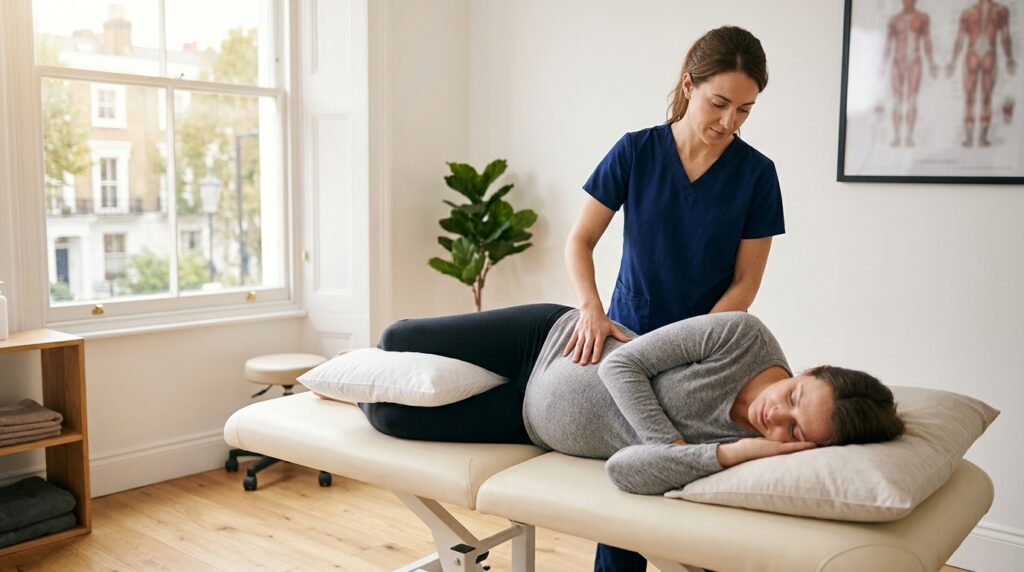
Seeing a chiropractor during pregnancy is safe for most women, as long as the chiropractor is registered, takes a thorough history and adapts their techniques to your changing body. If you have been searching for a chiropractor near me because your back, hips or pelvis have started to complain, this guide sets out what the research actually shows, which aches tend to appear in each trimester, how treatment is modified, and when back pain is a reason to call your midwife instead. At BackSpace, Clapham’s multi-award-winning chiropractic clinic founded in 2016, our GCC-registered chiropractors see expectant and new mothers every week, and these are the questions we are asked most often.
Why Back and Pelvic Pain Are So Common in Pregnancy
Back pain is not a minor side note of pregnancy. Research reviews report that somewhere between half and 85% of pregnant women experience low back pain, with some studies putting the figure closer to 90%. The NHS estimates that pelvic girdle pain affects up to 1 in 5 pregnant women to some degree. For a smaller group, symptoms continue well beyond the birth.
The causes are rarely a single thing. In clinic, we usually see a combination of the following.
Hormonal Changes and Looser Ligaments
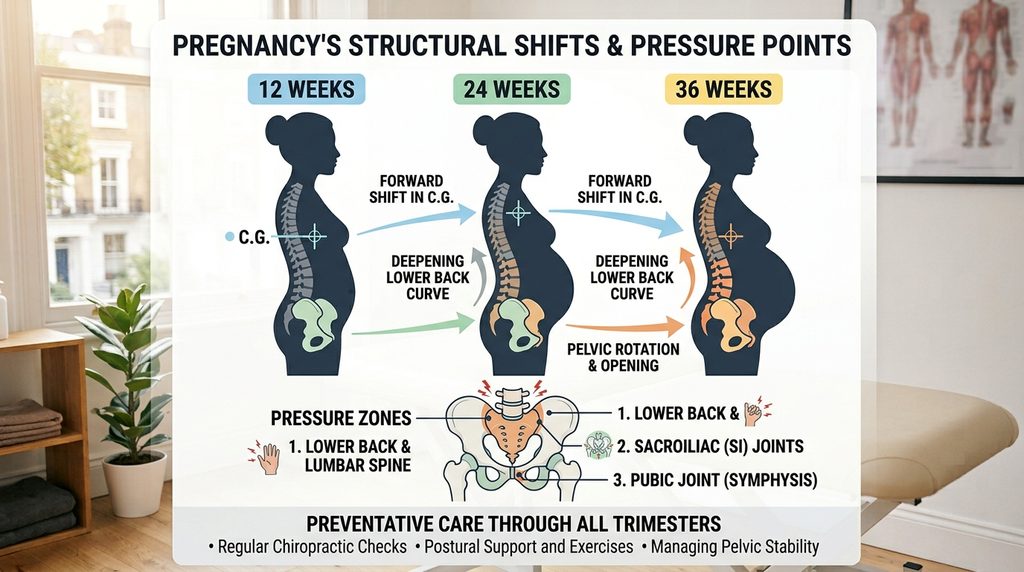
Pregnancy hormones, including relaxin, are thought to soften the ligaments that hold the pelvis and spine together. That flexibility helps prepare the body for birth, but it also means the muscles around the pelvis and lower back work harder to keep you stable.
A Shifting Centre of Gravity
As the bump grows, your centre of gravity moves forward. Most women compensate by leaning back slightly, which increases the curve in the lower back and loads the small joints there. The upper back and neck often stiffen as the chest and shoulders round forward.
Everyday Load, Sleep and Sitting
Lifting a toddler, long commutes on the Northern line, desk work and broken sleep all add up. Pain that was manageable at 14 weeks can feel very different at 32 weeks.
Is It Safe to See a Chiropractor During Pregnancy?
This is the first thing most women ask, and it deserves a straight answer rather than reassurance for its own sake.
What the Research Says About Safety
A 2012 critical review of the published literature found only a handful of reported adverse events following spinal manipulation in pregnant and postpartum women. A 2021 systematic review update found one serious event involving the neck and a small number of minor, short-lived reactions in the lower back. The authors concluded that serious injuries appear to be rare, while calling for better reporting in future studies.
In practice, the most common reaction after treatment is mild soreness for a day or two, similar to how you might feel after unfamiliar exercise.
What the Research Says About Benefit
The honest position is that the evidence is encouraging but not conclusive. A 2020 systematic review of chiropractic care for pregnancy-related back and pelvic pain rated the evidence for chiropractic care as inconclusive but favourable, and found that multimodal care, combining hands-on treatment, exercise and education, generally performed well. That matches what we see clinically: the best results come from combining gentle treatment with the right exercises and practical advice, not from treatment alone.
Choosing a Registered Pregnancy Chiropractor
In the UK, “chiropractor” is a protected title. Anyone using it must be registered with the General Chiropractic Council, which sets standards for training, conduct and consent. When you look for a pregnancy chiropractor, ask how often they treat expectant mothers, how they adapt positioning, and whether they will liaise with your midwife if needed.
When to Call Your Midwife First
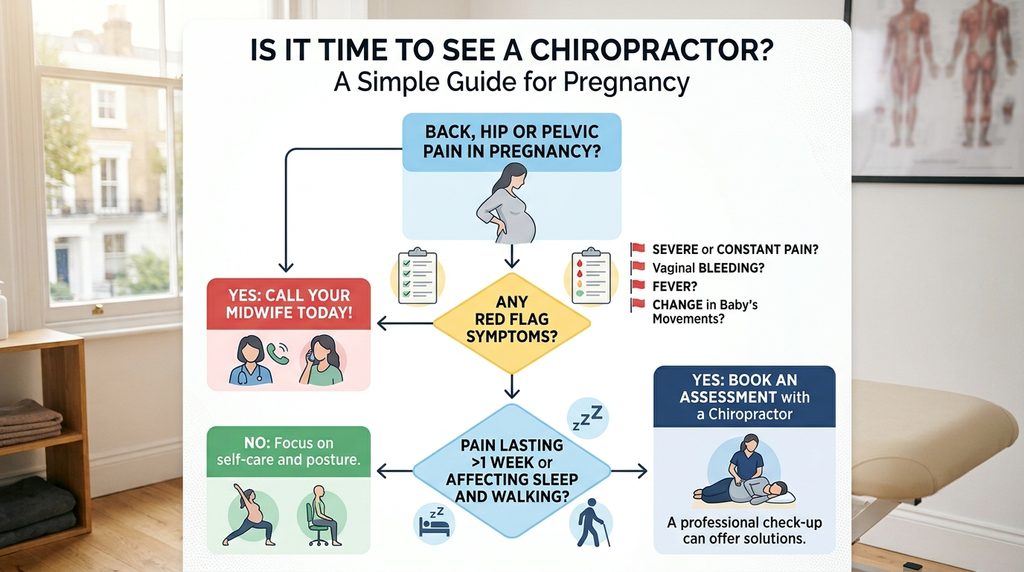
Most pregnancy back pain is mechanical, but some symptoms need medical assessment the same day. Contact your midwife or maternity triage unit straight away if back or pelvic pain comes with:
- Vaginal bleeding or leaking fluid
- Regular tightenings or period-like cramps before 37 weeks
- A severe headache, blurred vision or sudden swelling of the face, hands or feet
- A change in your baby’s usual pattern of movements
- Pain, heat or swelling in one calf
- A high temperature or pain when passing urine
- Numbness around the genitals or buttocks, or new bladder or bowel problems (call 999 or go to A&E)
We screen for all of these at your first visit. If anything in your history suggests a medical cause, we will refer you on rather than treat.
How Chiropractic During Pregnancy Can Help
Chiropractic during pregnancy focuses on the muscles and joints that are working overtime. The goal is to reduce pain, keep you moving and help you stay active for longer.
Lower Back Pain
This is the most common reason pregnant women come to see us. Gentle joint work, soft tissue release and specific exercises can ease the stiffness and muscle guarding that build up as posture changes. Our approach to lower back pain treatment in pregnancy uses the same assessment process as for any patient, with techniques adapted for comfort and safety.
Hip, Buttock and Pelvic Pain
Pain at the back of the pelvis, in the buttocks or at the front of the pubic bone is common from the second trimester. We assess which structures are involved and how the pain behaves when you walk, climb stairs or turn in bed. Treatment for this area is part of our wider hip pain treatment work, combined with advice on pacing and movement. If your symptoms suggest pelvic girdle pain, we will make sure your midwife is aware, as the NHS can arrange specialist support and equipment such as pelvic belts or crutches.
Leg Pain and Sciatica-Type Symptoms
Pain running into the buttock and down the back of the leg is often irritation from the lower back or pelvic muscles rather than a trapped nerve. Our sciatica treatment during pregnancy focuses on reducing that irritation and giving you positions that ease it at night.
Upper Back, Neck and Rib Discomfort
Later in pregnancy, many women feel a tight band around the mid-back or under the ribs. This often responds well to gentle mobilisation and soft tissue work. Many of the women we see first found us after searching for a back pain chiropractor near me, with no idea that pregnancy-related aches were something we treat routinely.
How We Adapt Treatment in Each Trimester
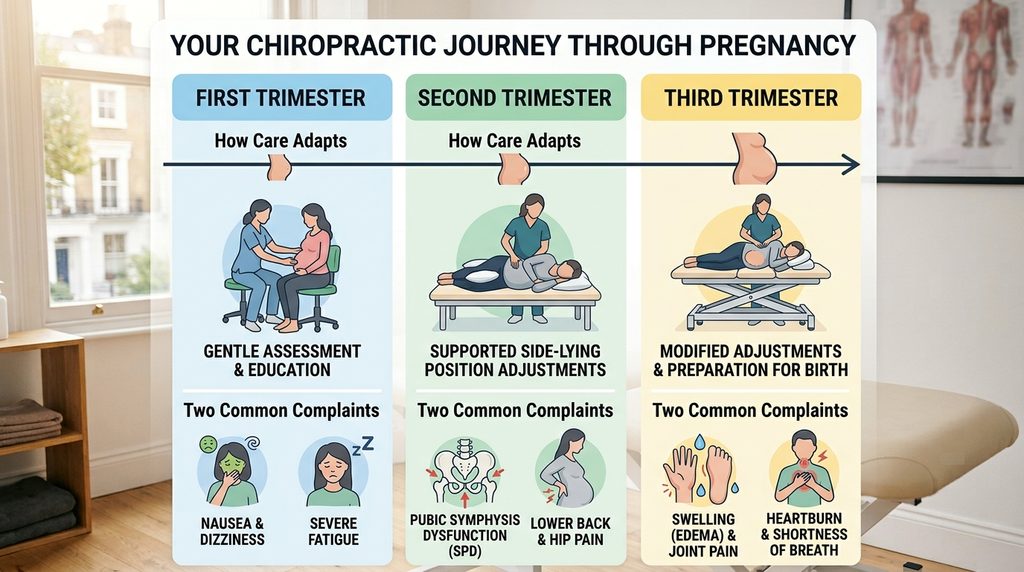
| Trimester | What Is Changing | Common Complaints | How We Adapt Care |
|---|---|---|---|
| First (weeks 1 to 12) | Hormone levels rise, fatigue and nausea are common | Existing back or neck problems flaring up | Full history, gentle techniques, flexible appointment length |
| Second (weeks 13 to 26) | Bump grows, posture shifts forward | Lower back, buttock, hip and leg pain | Supported or side-lying positions, soft tissue work, home exercises |
| Third (week 27 to birth) | Maximum load, disrupted sleep, ribs flaring | Pelvic and hip pain, mid-back and rib pain | Shorter, gentler sessions, sleep and movement strategies, taping |
Positioning and Comfort
Lying flat on your front is not an option for long, and lying flat on your back can feel uncomfortable later on. We treat you on your side, seated or semi-reclined with cushions, and we never apply pressure to the abdomen.
Techniques We Modify or Avoid
Not every technique we use day to day is appropriate in pregnancy. Joint adjustments are gentler and lower force. Dry needling is used selectively, if at all. Shockwave therapy is not used during pregnancy. Muscle taping can be helpful for supporting the lower back and bump in the later months. McKenzie-style exercises are adapted, as many standard positions are not practical with a growing bump.
Exercises and Advice Between Visits
Treatment works best alongside what you do at home. That usually means a short routine of gentle mobility and strengthening exercises, sleeping with a pillow between your knees, sitting down to dress, and keeping your knees together when getting in and out of a car. Many common painkillers are not recommended in pregnancy, so check any medication with your midwife or pharmacist.
What to Expect at Your First Appointment
Your first visit starts with a detailed conversation about your pregnancy, your symptoms, any previous back problems and what your midwife has told you so far. We then carry out a physical examination adapted for pregnancy, explain what we think is going on, and talk through a plan before any treatment begins.
Our pregnancy and postnatal care is led by chiropractors Lydia Scott Mearns and Victoria Portch, who have a particular interest in treating expectant and new mothers. You are welcome to bring your maternity notes. Wear loose, comfortable clothing, and a gown is available. Practical details on booking, what to bring and insurance are covered in our first appointment FAQs.
Comparing Your Options for Pregnancy Back Pain
| Option | What It Involves | Best Suited To | Limitations |
|---|---|---|---|
| Self-care at home | Pacing, pillow support, gentle movement | Mild, occasional aches | Does not address a stiff joint or ongoing muscle spasm |
| Pelvic support belt | Elastic belt worn around the pelvis | Pain when walking or standing for long periods | A comfort aid, not a treatment |
| Midwife or GP | Assessment, advice and NHS referral | Anyone with new, severe or worsening pain | Referral waiting times can be long |
| Chiropractic care | Assessment, gentle manual therapy, exercise and advice | Persistent back, hip, buttock or leg pain | Choose a registered chiropractor experienced in pregnancy |
These options work well together. Most of the women we treat combine chiropractic care with home exercises and regular contact with their midwife.
Chiropractic After the Birth
Back pain does not always stop at delivery. Feeding positions, lifting a car seat, carrying a baby on one hip and very little sleep all place new demands on a body that is still recovering. Research suggests that a minority of women still have symptoms two to three years after giving birth.
We usually suggest waiting until you feel physically ready, and until after your six to eight week postnatal check, before returning for treatment. Exhaustion and the pressure of the early weeks matter too, as there is a well-established link between how stress affects back pain and how quickly it settles. Babies are welcome at appointments.
Book a Prenatal Chiropractor in Clapham
If you would like a clear assessment and a plan that fits your stage of pregnancy, our team is here to help. BackSpace is at 15 Clapham Park Road, London SW4 7EE, a one-minute walk from Clapham Common Underground station (use the Clapham Common South Side and Clapham Park Road exit). Call us on 020 7498 7998, email info@thebackspace.co.uk, or book an appointment online.
Frequently Asked Questions
-
Is It Safe to See a Chiropractor When Pregnant?
For most women, yes. Published reviews show serious adverse events after chiropractic treatment in pregnancy are rare, and the most common reaction is mild, short-lived soreness. Safety depends on a thorough history, screening for warning signs and techniques adapted to pregnancy, such as gentler, lower-force adjustments, side-lying positions and no pressure on the abdomen. Always choose a chiropractor registered with the General Chiropractic Council, and let your midwife know you are having treatment.
-
When Is the Best Time to Start Seeing a Prenatal Chiropractor?
You can see a prenatal chiropractor at any stage of pregnancy, including the first trimester. Most women come to us during the second trimester, when the bump starts to change their posture and lower back or hip pain begins. Getting assessed early is sensible, because pain that is addressed sooner is usually easier to manage. Waiting until the final weeks, when sleep and walking are already affected, tends to make progress slower.
-
Will I Need to Lie on My Front During Treatment?
No. Once your bump makes lying on your front uncomfortable, we treat you on your side, sitting or semi-reclined with cushions supporting you. We avoid any pressure on the abdomen at every stage. Positioning is adjusted throughout the session so you stay comfortable, and you can ask to change position at any time. Many women are surprised by how relaxed the treatment feels compared with what they expected.
-
Do I Need a Referral From My Midwife or GP?
You do not need a referral to book with us. You can contact the clinic directly and arrange an assessment. We do recommend telling your midwife that you are seeing a chiropractor, and bringing your maternity notes to your first appointment, particularly if your pregnancy has any complications. If our assessment suggests your symptoms need medical review, we will advise you to speak with your midwife or GP before continuing.
-
Can a Chiropractor Help Turn a Breech Baby?
There is no robust evidence that chiropractic treatment can turn a breech baby, and we do not offer treatment for that purpose. If your baby is lying in a breech position, your midwife or obstetrician is the right person to discuss options with. What we can do is help with the back, hip and pelvic discomfort that often comes with late pregnancy, so you stay as comfortable and mobile as possible.
-
Can Chiropractic Care Continue After My Baby Is Born?
Yes. Postnatal back, neck and pelvic pain is common, especially with feeding, lifting and broken sleep. We usually suggest waiting until after your six to eight week postnatal check and until you feel ready. Treatment then focuses on easing pain, restoring movement and building strength for everyday tasks like lifting a car seat. Babies are welcome to come along to appointments with you.
A sore back is common in pregnancy, but it should not be something you simply put up with.